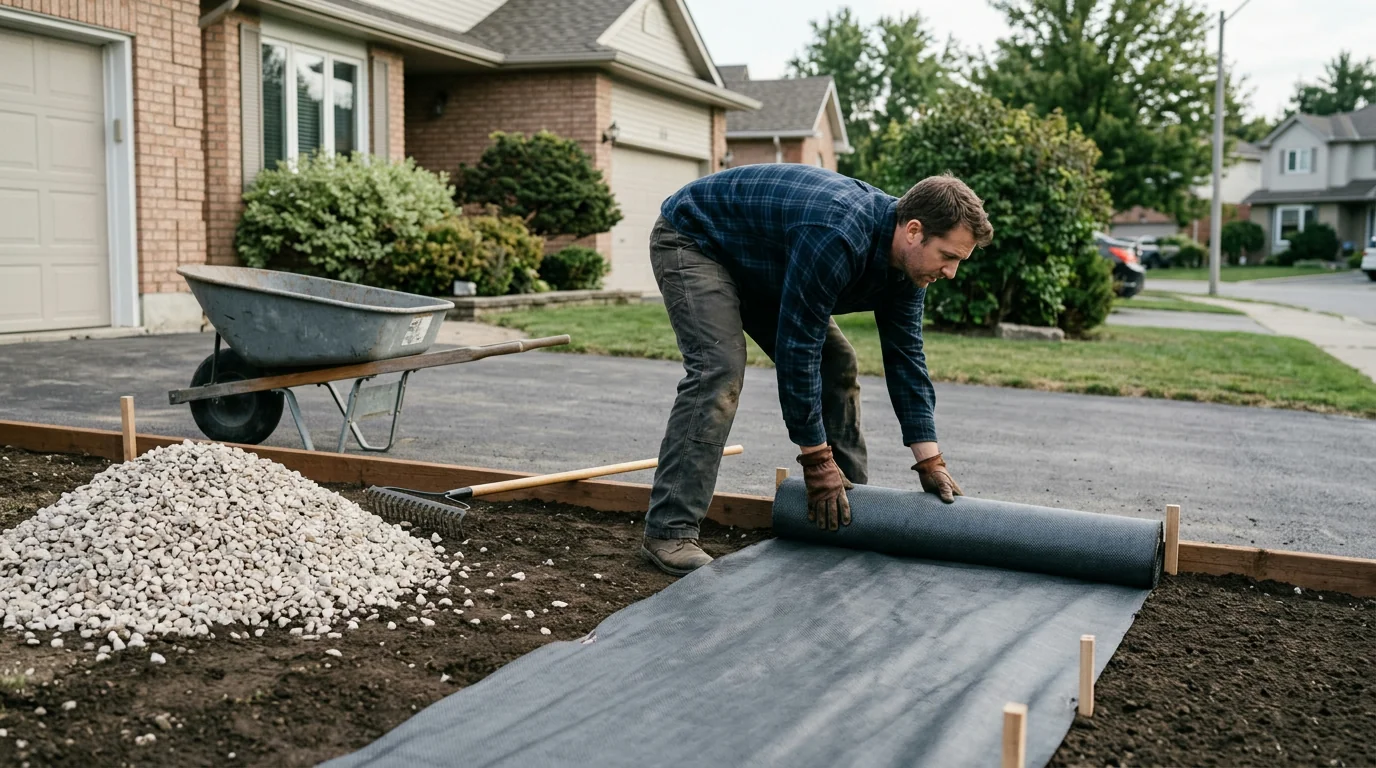
74% off on product page · save $120.03
Heavy Duty Geotextile Fabric for Driveways and Landscaping
One 12.5 × 50 ft roll provides 625 square feet of nominal coverage . That figure is the full rectangular area of the fabric, not necessarily the finished area you can cover after cutting and overlapping pieces.
Measure the length and width of each part of your project, then multiply them to estimate square footage. For an irregular area, divide the space into smaller rectangles and add their areas. Allow extra fabric for overlaps, trimming, curves, and edges that do not run straight.
Coverage Planning
| Project area | Nominal area | Planning note |
|---|---|---|
| 10 × 40 ft | 400 sq ft | One roll covers the nominal area; allow for overlaps and trimming. |
| 12.5 × 50 ft | 625 sq ft | Equal to the roll’s full nominal area, with no allowance for waste. |
| 20 × 40 ft | 800 sq ft | More than one roll is needed before allowing for overlaps. |
Price and availability can change, so confirm both before placing your order. When planning multiple pieces, sketch their layout first: a project can require more fabric than its square footage alone suggests.
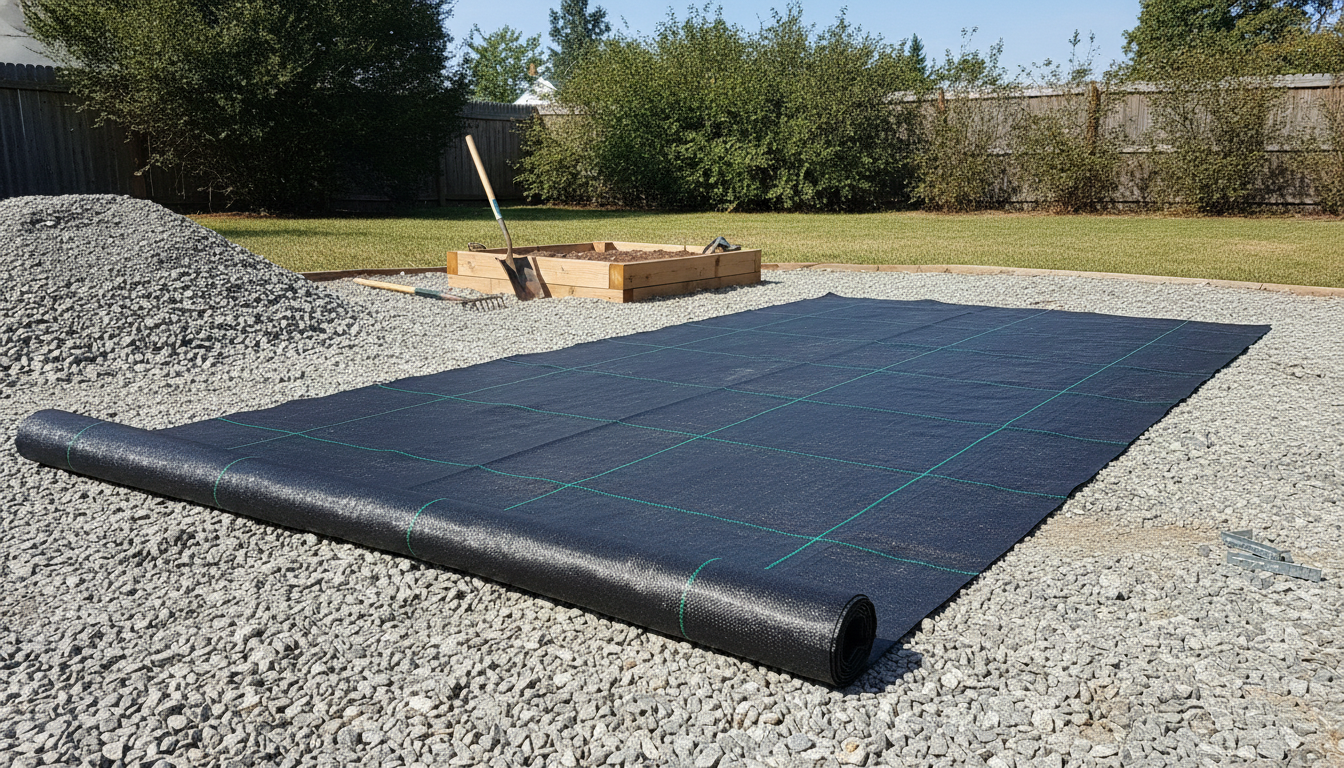
In a suitable driveway installation, geotextile fabric can serve as a separating layer between prepared soil and aggregate. Separation helps keep the stone and underlying soil from mixing as readily under traffic. It is one part of the driveway assembly, not a substitute for a properly prepared base or an adequate aggregate layer.
If your site has soft soil, standing water, or significant vehicle loads, the design may need more attention than simply adding fabric. The Federal Highway Administration’s geosynthetic design and construction guidelines provide background on how these materials are used in ground applications.
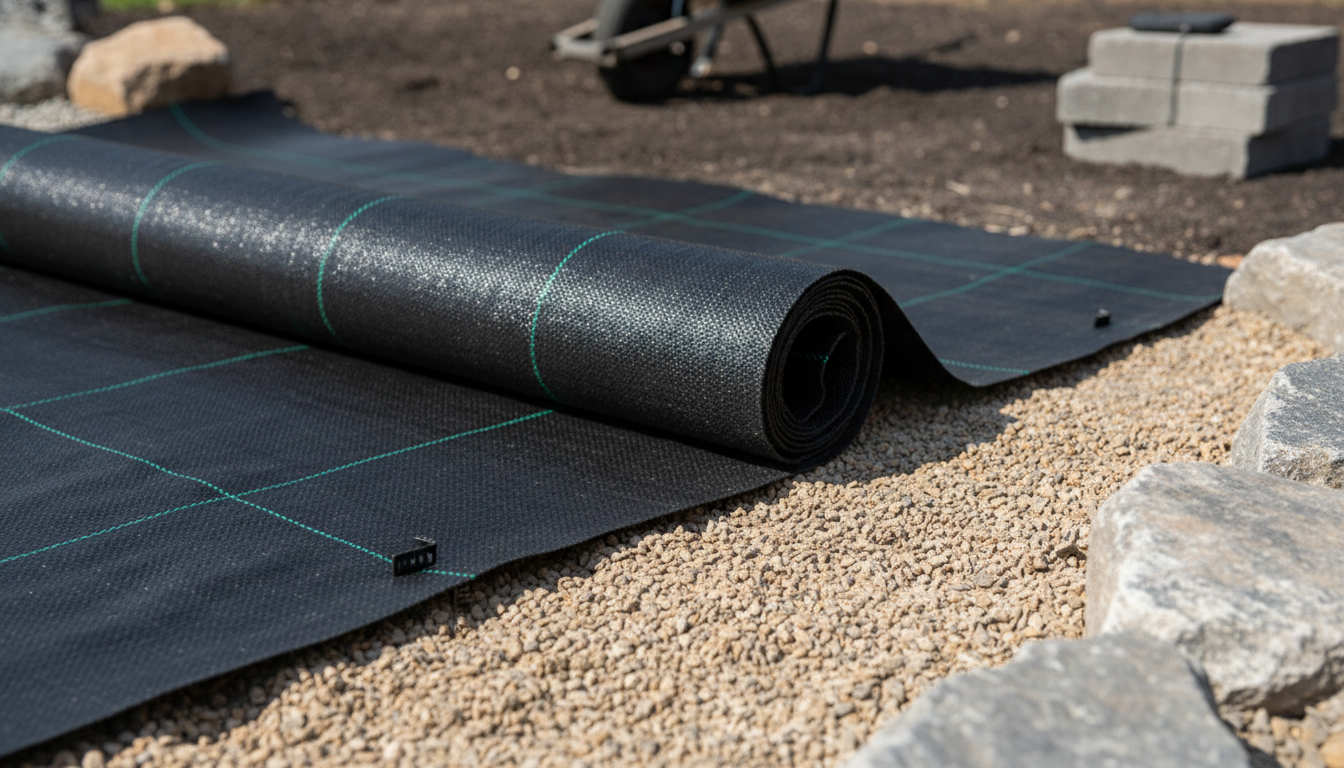
Featured in this guide
Heavy Duty Geotextile Fabric Weed Barrier for Driveways & Landscaping – 12.5×50 ft
Under a suitable cover such as decorative stone, fabric can limit weeds growing through from below. It will not stop seeds from settling and sprouting in debris above it.
Remove accumulated debris and pull new weeds before their roots become established. Leave suitable openings around desirable plants and account for their future growth.
For a driveway, consider soil conditions, vehicle loads, aggregate depth, drainage, and local requirements together.
Woven and nonwoven geotextiles differ in construction and performance; neither is automatically better for every application. A driveway selection should match documented strength, separation, and drainage properties to the soil, aggregate, and expected traffic. Landscaping priorities may differ, especially where the main goal is limiting weeds beneath a decorative cover.
Check published specifications before relying on a particular construction type, permeability, or load rating. Our team recommends comparing those details with the needs of your site rather than choosing on the phrase “heavy duty” alone.
If your outdoor work is part of a broader property project, we also offer A Clear Path into Real Estate, a beginner’s collection of guides and checklists. It is separate from the fabric and does not replace site-specific installation advice.
Before choosing, compare the product details with your daily routine, available space, care needs, and preferred setup. The strongest option is usually the one that fits the intended use clearly and remains simple to clean, store, and check before repeat use.
Heavy duty geotextile fabric is a durable material used in ground projects, including soil-and-aggregate separation and landscaping applications. Its suitability and performance depend on its published specifications and the conditions where it is installed.
Many geotextiles are permeable, but their drainage rates vary. Check the fabric’s permeability information and consider the soil and overall drainage design as well.
There is no single best fabric for every driveway. Match documented strength, separation, and drainage properties to your soil, aggregate, and expected traffic.
Neither is universally better; the choice depends on the project and the specifications of the particular fabric. Compare the properties required for your site, including strength and drainage, before choosing.



Leave a comment
You must be logged in to post a comment.